Welcome Message
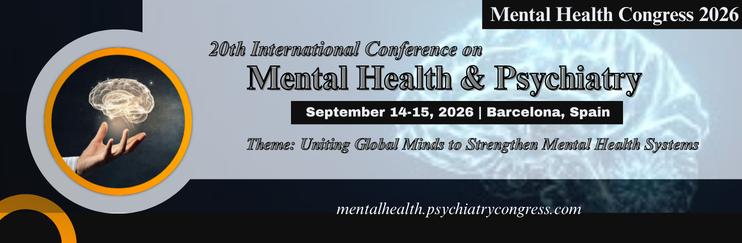
We are delighted to welcome global researchers, clinicians, academicians, and mental health professionals to the “20th International Conference on Mental Health & Psychiatry” scheduled for September 14-15, 2026, in Barcelona, Spain. Centered on the theme “Uniting Global Minds to Strengthen Mental Health Systems” this conference highlights the importance of collaboration in advancing psychiatric care and mental well-being.
The scientific program will explore emerging insights into brain function, behavioral health, and innovative approaches to understanding and treating mental health disorders. Sessions will focus on advances in psychiatric research, neurobiological mechanisms, and evidence-based clinical practices aimed at improving cognitive, emotional, and psychological outcomes.
Attendees will benefit from keynote presentations, expert panel discussions, and interactive workshops, participants will engage with the latest developments shaping the future of psychiatry. Emphasis will be placed on interdisciplinary approaches that integrate biological, psychological, and social perspectives in mental health care.
We look forward to welcoming you to Barcelona for a dynamic and enriching scientific exchange that fosters innovation, collaboration, and progress in global mental health systems.
Target Audience
-
Psychiatrists
-
Clinical Psychologists
-
Neurologists
-
Mental Health Counsellors
-
Behavioral Scientists
-
Psychotherapists
-
Psychiatric Nurses
-
Neurobiologists
-
Public Health Professionals
-
Social Workers
-
Academic Researchers & Faculty
-
Healthcare Practitioners
-
Rehabilitation Specialists
-
Policy Makers in Mental Health
-
Pharmaceutical & Healthcare Industry Professionals
-
Digital Health & AI Experts
-
Graduate Students
-
Postgraduate Trainees
-
PhD Scholars
-
Clinical Fellows & Residents
About Conference
The 20th International Conference on Mental Health & Psychiatry, scheduled for September 14-15, 2026, in Barcelona, Spain, serves as a premier global platform for advancing research, innovation, and clinical practice in the field of mental health. Centered on the theme “Uniting Global Minds to Strengthen Mental Health Systems” the conference underscores the importance of collaborative and integrated approaches to psychiatric care.
The scientific program covers a wide range of topics, including neurobiology, psychotherapy, clinical psychiatry, digital mental health, and public mental health systems. It will highlight recent advancements in understanding psychiatric disorders, brain function, and evidence-based treatment approaches aimed at improving psychological and emotional well-being.
Participants will gain valuable insights into modern diagnostic methods, therapeutic interventions, and patient-centered care models. The conference also emphasizes early intervention, prevention strategies, and the continuous evolution of mental health services to meet global challenges.
Through keynote presentations, panel discussions, workshops, and poster sessions, the conference encourages knowledge sharing, interdisciplinary collaboration, and the translation of research into effective clinical practice, contributing to the advancement of global mental health and psychiatry.
Why to Attend
The 20th International Conference on Mental Health & Psychiatry provides an excellent opportunity to connect with global experts, researchers, and professionals committed to advancing mental health care. Over two engaging days, participants will explore innovative approaches to the diagnosis, treatment, and prevention of psychiatric disorders.
The conference offers valuable insights into the latest developments in psychiatry, including advancements in neurobiology, psychotherapy, and digital mental health. Attendees will gain practical knowledge of modern therapeutic strategies and patient-centered care approaches that improve mental health outcomes.
In addition to its strong academic focus, the event serves as a platform for networking, collaboration, and knowledge exchange among professionals from diverse backgrounds. It encourages interdisciplinary discussions and fosters partnerships that contribute to progress in mental health research and clinical practice
Attending this conference will help participants stay updated and enhance their expertise in delivering effective psychiatric care.
Conference Highlights
-
Global Mental Health Leaders on One Platform:
Engage with internationally recognized psychiatrists, researchers, and clinicians shaping modern mental healthcare systems worldwide.
-
Advanced Workshops & Clinical Sessions:
Participate in expert-led sessions focusing on psychotherapy, neurobiology, and innovative treatment approaches influenced by factors such as glycemic control.
-
Scientific Sessions on Emerging Research:
Explore cutting-edge topics including digital psychiatry, brain imaging, and interdisciplinary studies examining links with insulin regulation and mental health outcomes.
-
Mental Health Technology & Innovation Showcase:
Discover advanced tools, AI-based mental health solutions, and digital healthcare technologies transforming psychiatric care delivery.
-
Young Researchers & Early Career Forum:
A dedicated platform for students, researchers, and fellows to present work, gain feedback, and build international exposure.
-
Networking & Global Collaboration:
Connect with professionals across disciplines to foster research collaborations and knowledge exchange.
-
Awards for Scientific Excellence:
Recognition for outstanding contributions through Best Research Presentation, Young Investigator Award, Best Poster, and Clinical Innovation Awards.
Sessions and Tracks
Advancements in neuroscience reveal how brain structure and function influence mental health conditions. Changes in neural circuits and neurotransmitters affect cognition, mood, and behavior. Understanding these mechanisms supports early diagnosis and targeted treatments, while modern imaging techniques enhance assessment accuracy and improve patient outcomes.
Research Focus Areas:
-
Neural Circuit Dysregulation
-
Neurotransmitter Imbalance Models
-
Brain Imaging Correlates
Modern psychotherapy continues to evolve through the integration of cognitive, emotional, and behavioral techniques aimed at improving mental health outcomes. Innovative therapeutic approaches are being developed to address complex psychiatric conditions, enhancing patient engagement and long-term recovery. Digital mental health platforms have expanded access to therapy, enabling more flexible and personalized care. Emphasis is placed on evidence-based practices, early intervention, and tailored treatment strategies that support individual needs and promote psychological well-being.
Therapeutic Pathways:
-
Cognitive Therapy Advancements
-
Behavioral Modification Techniques
-
Digital Mental Health Tools
Psychiatric epidemiology examines the distribution, prevalence, and determinants of mental health disorders across populations. It helps identify risk factors and supports the development of effective prevention and intervention strategies. Public mental health focuses on raising awareness, reducing stigma, and improving access to quality care. Community-based programs and data-driven approaches enable early identification and better management of conditions. Integrating mental health into primary healthcare systems strengthens service delivery and promotes long-term well-being.
Population Insights:
-
Risk Distribution Analysis
-
Preventive Health Models
-
Community Mental Health Planning
Child and adolescent psychiatry focuses on the early identification and treatment of mental health disorders in young individuals. Emotional and behavioral challenges during development can affect long-term well-being. Early intervention, family support, and school-based care play a key role in promoting healthy psychological growth. Multidisciplinary approaches help address conditions such as anxiety, depression, and behavioral disorders.
Developmental Perspectives:
-
Early Disorder Indicators
-
Pediatric Intervention Models
-
Family-Centered Care
Geriatric psychiatry addresses the mental health challenges associated with aging, including cognitive decline, memory loss, and mood disorders. Older adults are at increased risk of conditions such as dementia, depression, and anxiety, which can significantly impact quality of life. Early diagnosis and appropriate therapeutic interventions are essential for effective management. This field emphasizes comprehensive care approaches, including psychological support and cognitive therapies, to enhance well-being and maintain functional independence in aging populations.
Aging Care Models:
-
Dementia Management
-
Cognitive Decline Assessment
-
Integrated Elderly Support
Stress, anxiety, and trauma-related disorders are among the most common mental health conditions affecting individuals of all ages. Chronic stress can impact emotional stability, cognitive function, and overall well-being. Effective management requires early identification, appropriate therapeutic interventions, and ongoing support. Trauma-informed care focuses on understanding the psychological effects of adverse experiences while promoting resilience and recovery. Advances in psychotherapy and clinical practices continue to enhance treatment outcomes and help individuals restore emotional balance.
Stress Response Systems:
-
Trauma Recovery Approaches
-
Anxiety Regulation Methods
-
Neuroendocrine Analysis
Addiction psychiatry focuses on understanding and treating substance use disorders that affect brain function, behavior, and emotional well-being. These conditions involve changes in brain reward pathways, leading to compulsive substance use and dependence. Effective management requires a combination of psychological therapies, behavioral interventions, and long-term support strategies. Early identification and integrated treatment approaches improve recovery outcomes and reduce relapse risk. Ongoing research continues to enhance prevention methods and therapeutic practices in addiction care.
Addiction Dynamics:
-
Neurobiology of Dependence
-
Rehabilitation Strategies
-
Relapse Prevention Models
Mood disorders, including depression and bipolar disorder, involve complex interactions between brain function, emotional regulation, and environmental influences. Affective neuroscience explores the neural mechanisms underlying mood, behavior, and emotional processing. Advances in research have improved understanding of how brain circuits and neurotransmitters influence mood stability. Early diagnosis and evidence-based treatments are essential for effective management and improved quality of life. Ongoing studies continue to refine therapeutic approaches and enhance outcomes for individuals affected by mood disorders
Emotional Health Models:
-
Mood Regulation Mechanisms
-
Neurochemical Studies
-
Therapy Innovations
Schizophrenia and other psychotic disorders are serious mental health conditions affecting perception, thinking, and behavior. Symptoms such as hallucinations, delusions, and cognitive impairments can disrupt daily life. Advances in research have improved understanding of neurobiological and genetic factors. Early diagnosis and timely intervention are essential for effective management. Treatment typically combines medication, psychotherapy, and psychosocial support to reduce symptoms, enhance recovery, and improve overall quality of life.
Clinical Evaluation Areas:
-
Early Diagnosis Markers
-
Genetic Risk Assessment
-
Treatment Strategies
Neurodevelopmental disorders affect cognitive, behavioral, and social functioning, typically emerging in early childhood. Conditions such as autism spectrum disorder and ADHD impact learning, communication, and daily activities. Early identification, timely intervention, and multidisciplinary care are essential to support development and improve long-term outcomes.
Developmental Insights:
-
Autism Spectrum Studies
-
Cognitive Function Analysis
-
Intervention Techniques
Digital psychiatry and telehealth are transforming the delivery of mental health services by improving accessibility, efficiency, and continuity of care. Virtual consultations, mobile health applications, and online therapy platforms enable timely support for individuals across diverse settings. These technologies facilitate early intervention, remote monitoring, and personalized treatment approaches. While enhancing reach, digital solutions also require careful consideration of privacy, ethics, and quality of care to ensure safe and effective mental health services.
Technology Integration:
-
AI-Based Diagnostics
-
Telehealth Expansion
-
Digital Monitoring Tools
Psychopharmacology focuses on the use of medications to treat mental health disorders and improve patient outcomes. Advances in drug development have led to more effective and targeted treatments for conditions such as depression, anxiety, and psychotic disorders. Research continues to explore new compounds, mechanisms of action, and personalized treatment approaches. Ensuring safety, efficacy, and minimal side effects remains a key priority in developing medications that support long-term mental health and well-being.
Pharmacological Advances:
-
Drug Mechanism Studies
-
Clinical Trials
-
Personalized Medicine
Sleep disorders significantly affect mental health, influencing mood, cognition, and overall well-being. Conditions such as insomnia and sleep disturbances are closely linked with anxiety, depression, and other psychiatric disorders. Effective management improves mental health outcomes and quality of life.
Sleep Science Areas:
-
Circadian Rhythm Research
-
Sleep Disorder Diagnosis
-
Treatment Methods
Suicide prevention and crisis intervention are critical components of mental health care, aimed at reducing risk and saving lives. Early identification of warning signs, timely support, and effective intervention strategies are essential in managing individuals in crisis. Mental health professionals utilize evidence-based approaches, including counseling, crisis hotlines, and community support systems. Promoting awareness, reducing stigma, and strengthening support networks play a key role in prevention and recovery, ensuring individuals receive the care and assistance they need during vulnerable periods.
Prevention Frameworks:
-
Risk Identification
-
Crisis Response
-
Community Support
Cultural psychiatry examines how cultural, social, and environmental factors influence mental health, illness perception, and treatment outcomes. Beliefs, traditions, and social norms shape how individuals experience and express psychological distress. Understanding these influences helps clinicians provide culturally sensitive and effective care. Social determinants such as family dynamics, socioeconomic status, and community support also play a vital role in mental well-being. Integrating cultural awareness into psychiatric practice enhances patient engagement, reduces disparities, and improves overall mental health outcomes.
Cultural Perspectives:
-
Social Determinants
-
Cross-Cultural Care
-
Inclusive Practices
Forensic psychiatry examines the interface between mental health and the legal system. It involves evaluating mental state, criminal responsibility, and competency to stand trial. The field also addresses risk assessment, legal rights, and ethical challenges in psychiatric practice, ensuring fair and informed legal decisions.
Legal Considerations:
-
Criminal Responsibility
-
Risk Assessment
-
Ethical Practice
Women’s mental health focuses on psychological well-being across different life stages, including adolescence, pregnancy, postpartum, and menopause. Hormonal changes can influence mood, emotional regulation, and vulnerability to mental health disorders such as depression and anxiety. Understanding these factors supports early identification and effective treatment. This field emphasizes gender-sensitive care, integrating biological, psychological, and social perspectives to improve outcomes and enhance quality of life for women.
Women’s Health Focus:
-
Hormonal Impact Studies
-
Maternal Mental Health
-
Gender-Specific Care
Occupational mental health focuses on the impact of workplace environments on psychological well-being. Work-related stress, burnout, and job insecurity can significantly affect mental health and productivity. Addressing these challenges involves promoting healthy work environments, stress management strategies, and employee support systems. Organizations are increasingly adopting mental health policies and wellness programs to enhance resilience and job satisfaction. Effective interventions help improve overall well-being, reduce absenteeism, and create a more supportive and productive workplace.
Workplace Strategies:
-
Stress Management
-
Employee Wellness Programs
-
Productivity Enhancement
Nutrition and lifestyle play an important role in maintaining mental health and overall well-being. Healthy eating habits, regular physical activity, and balanced daily routines support emotional stability and cognitive function. Lifestyle-based interventions can complement psychiatric treatments, improve resilience, and enhance long-term mental health outcomes.
Lifestyle Approaches:
-
Nutritional Interventions
-
Preventive Care
-
Behavioral Modifications
Integrative and holistic mental health approaches focus on treating the whole person by combining conventional psychiatric care with complementary therapies. These approaches emphasize the connection between mind, body, and lifestyle in promoting mental well-being. Techniques such as mindfulness, meditation, and stress management are increasingly incorporated into treatment plans. A holistic framework supports personalized care, enhances resilience, and improves overall outcomes by addressing emotional, psychological, and social aspects of mental health.
Holistic Care Models:
-
Mind-Body Integration
-
Alternative Therapies
-
Preventive Health Strategies.
Artificial Intelligence (AI) is transforming mental health care by enhancing diagnosis, treatment, and continuous patient monitoring. AI-driven technologies analyze complex datasets to identify early signs of mental health conditions such as depression, anxiety, and psychotic disorders. Machine learning supports clinical decision-making, while digital tools like chatbots and virtual assistants improve accessibility and engagement. Predictive analytics and digital phenotyping enable personalized care and early intervention. However, ethical concerns, data privacy, and bias must be addressed to ensure safe implementation. Integrating AI with clinical practice can significantly improve efficiency, accuracy, and global access to mental health services.
-
AI-Based Diagnostics in Psychiatry
-
Machine Learning for Mental Health Prediction
-
Digital Phenotyping and Behavioral Monitoring
-
AI Chatbots and Virtual Therapy Assistants
-
Predictive Analytics for Early Intervention
-
Ethical and Privacy Challenges in AI
-
AI in Personalized Mental Health Treatment
-
Integration of AI in Clinical Practice.
Market Analysis
The global mental health and psychiatry market is experiencing steady growth, driven by the rising prevalence of disorders such as anxiety, depression, bipolar disorder, and schizophrenia, along with increasing awareness and reduced social stigma. Rapid urbanization, changing lifestyles, and growing workplace stress are key factors contributing to the surge in mental health issues, leading to higher demand for diagnosis and treatment services. Governments and healthcare organizations are responding by investing in mental health infrastructure, policy development, and awareness initiatives to improve access to care.
Technological advancements are further accelerating market growth, with innovations such as telepsychiatry, AI-based diagnostics, and digital therapeutics making mental healthcare more accessible and efficient, especially in underserved areas. At the same time, there is a growing shift toward personalized and patient-centered treatment approaches that combine therapy, medication, and holistic care. Despite challenges like limited access to professionals and high treatment costs, the market is expected to continue expanding due to ongoing innovation, increased funding, and a stronger global focus on mental well-being.
Global Mental Health Market Growth (2020–2026):
The data shows a steady and consistent growth in the global mental health market from 2020 to 2026. The increase from USD 380 billion to USD 550 billion reflects rising awareness, improved diagnosis, and expanding access to mental healthcare services. Growth becomes more pronounced after 2023, largely due to the adoption of digital health technologies and telepsychiatry.

Distribution of Mental Health Disorders (%):
This data highlights the distribution of major mental health disorders, with anxiety (30%) and depression (28%) being the most prevalent globally. These conditions contribute significantly to the overall mental health burden and often require long-term management. Bipolar disorder and schizophrenia, though lower in percentage, represent serious conditions that need specialized treatment.

Abstract Submission, Registration and Visa Guidelines
Abstract Submission
Researchers, psychiatrists, psychologists, academicians, clinicians, and healthcare professionals are invited to submit original scientific contributions to the 20th International Conference on Mental Health & Psychiatry, scheduled for September 14–15, 2026, in Barcelona, Spain. Submissions may include research abstracts, clinical studies, case reports, systematic reviews, poster presentations, or e-posters aligned with the conference theme and scientific tracks.
The conference encourages submissions exploring interdisciplinary perspectives, including biological influences such as insulin resistance on mental health. Authors may also present findings related to cognitive outcomes affected by glucose metabolism and associated behavioral changes. Research highlighting neuropsychiatric implications of systemic conditions like hyperglycemia is highly welcomed. Innovative studies integrating physiological and psychological dimensions, including metabolic dysregulation, will be given special consideration.
Abstract Guidelines
-
All abstracts must be submitted in English.
-
The abstract should not exceed 500 words.
-
The title must be written in sentence case and clearly reflect the study focus.
-
Provide full name, affiliation, and designation of the presenting author and all co-authors.
-
Include a short biography of the presenting author (maximum 150 words) along with a professional photograph.
-
Abstracts should align with conference tracks such as psychiatry, psychotherapy, neuroscience, public mental health, digital psychiatry, and related disciplines.
Review Process
All submitted abstracts will be evaluated by the Scientific Review Committee. Authors will receive notification regarding acceptance, revision, or rejection via email, typically within 24–48 hours of submission.
Accepted abstracts will be assigned for:
-
Oral Presentations
-
Poster Presentations
-
Workshop Sessions
Selection will be based on scientific relevance, originality, and alignment with conference themes.
Publication
All accepted abstracts will be included in the official conference proceedings. Selected submissions may be considered for publication in associated international journals, conference compendiums, or mental health and psychiatry-focused publications.
Abstract Submission Link: https://mentalhealth.psychiatrycongress.com/abstract-submission
Registration
After abstract acceptance, participants are required to complete their registration through the official conference portal. Early registration is strongly recommended to secure participation in scientific sessions, workshops, networking opportunities, and certification.
Registration Link: https://mentalhealth.psychiatrycongress.com/registration
Visa Guidelines
The organizing committee of the 20th International Conference on Mental Health & Psychiatry 2026 does not directly process visas for Spain. However, we provide all necessary supporting documents to assist participants with their visa application process.
Documents Provided for Visa Support
Upon request, the following documents will be issued:
-
Official Letter of Invitation
-
Letter of Abstract Acceptance
-
Registration Confirmation and Payment Receipt
Visa Application Note
Visa requirements vary depending on your country of residence and the regulations of the Spanish Embassy or Consulate. Participants are strongly advised to apply well in advance of the conference dates to avoid delays.
Letter of Invitation
The Letter of Invitation confirms your abstract acceptance and/or completed registration for the conference. This document is issued in English and can be used as supporting documentation for your visa application.
Contact for Visa Support
For visa-related assistance or to request official supporting documents, please contact: [email protected].
Past Conference
Conference Overview
The 2025 edition of the conference brought together global experts in psychiatry, psychology, neuroscience, and mental health research. It served as an international platform for presenting scientific research, exchanging knowledge, and fostering collaboration among healthcare professionals and researchers.
The event emphasized interdisciplinary approaches, encouraging both empirical and conceptual contributions from academia and industry. It provided a structured environment where participants could explore innovative ideas, share research findings, and gain exposure to diverse methodologies in mental health and psychiatry.
Scientific Program & Participation
-
Included oral presentations and poster presentations
-
Abstracts were peer-reviewed and published with DOI indexing
-
Participants included professionals from multiple regions such as:
-
Asia-Pacific
-
Europe
-
Americas
The conference encouraged active interaction between speakers and attendees, promoting knowledge exchange and research collaboration.
Key Features & Highlights
-
Platform for global networking and collaborations
-
Participation from researchers, clinicians, and industry professionals
-
High engagement, with 80% attendees visiting exhibitor booths multiple times
-
Opportunities for organizing symposiums and scientific sessions
-
Exposure to new research trends, tools, and techniques in psychiatry